
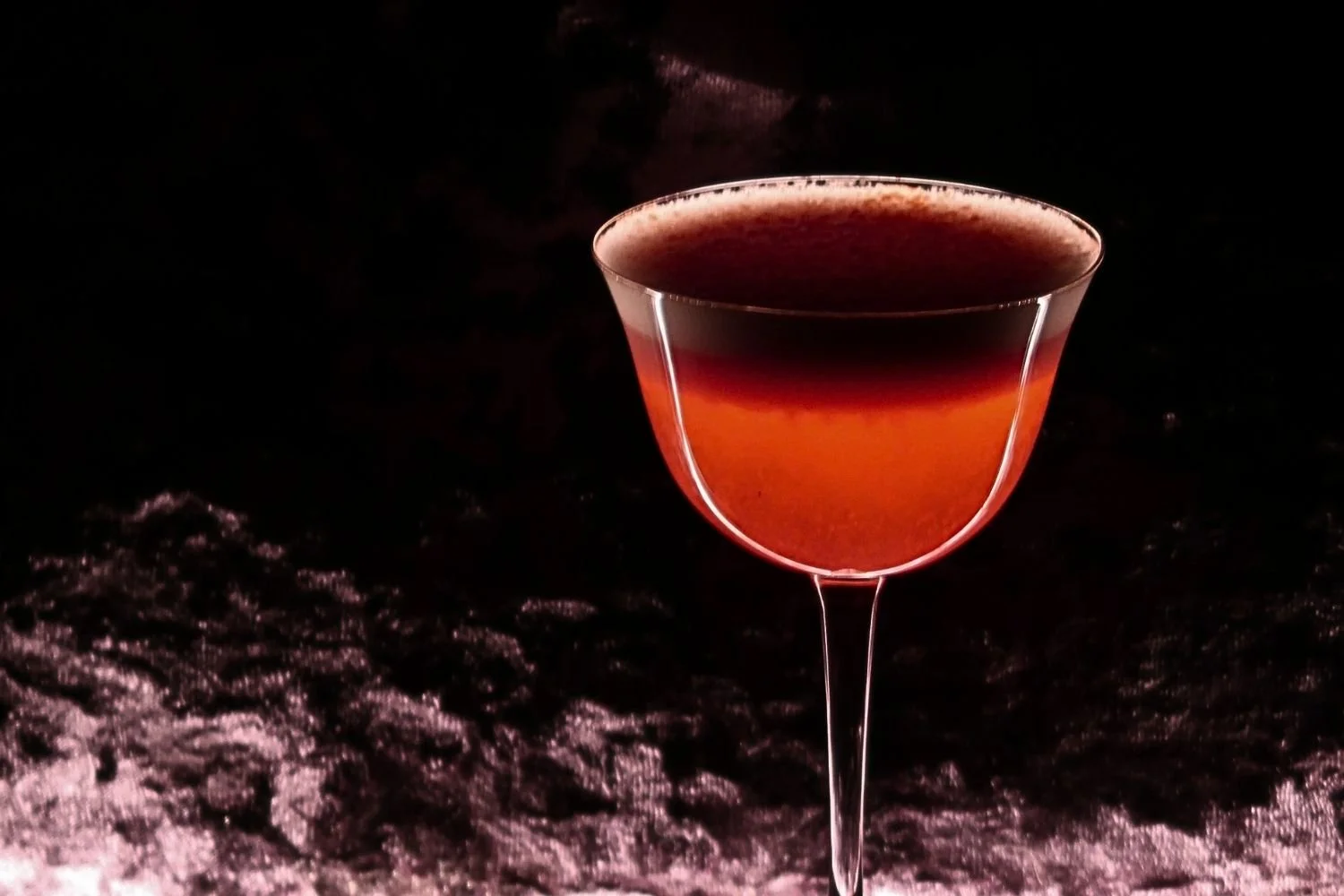
A drinks list at a real cocktail bar is not a menu. It's a room inside a room.
The names are short and strange. The descriptions read like perfume copy. The bartender sets your glass down without explaining anything, because at a place like this, the drink is supposed to do the talking.
If you've ever pulled up a barstool somewhere with velvet on the walls and burgundy in the lighting and felt unsure what to order — this is for you.
The types of drinks in a bar go well beyond "beer or wine."
And once you understand what you're looking at, the whole experience opens up.
What Types of Drinks You Can Order at a Bar
A well-built bar doesn't just stock alcohol. It stocks a world. Every section of a drinks list has its own logic, its own mood, its own reason to exist. Here's how it breaks down.
Cocktails
A cocktail is a composed drink. It starts with a base spirit and layers from there. Citrus, bitters, syrup, liqueur, vermouth, each one added with intention. The goal is always balance. Sweetness against acidity. Warmth against brightness. The spirit carrying everything without overwhelming it.
Cocktails and bar drinks are related but not the same. A cocktail has a point of view. A bartender building one is making dozens of small decisions before it reaches your hand.
Mixed Drinks
Simpler, quicker, still satisfying. A mixed drink is two or three ingredients: a spirit, a mixer, maybe a garnish. Vodka soda. Gin and tonic. Dark rum and ginger beer. These are the drinks you fall back on when you know what you want and you want it fast. Nothing wrong with that.
Wine and Champagne
A serious cocktail bar usually carries a focused wine list. Champagne, specifically, belongs in rooms like this. Something about the dry fizz in a tall flute, the way it catches the light; it reads as celebration even when nothing particular is happening.
Beer
Not always the first choice at a cocktail-forward bar, but usually available. Often a curated short list. Worth asking about if you want something lower-key.
Spirits and Liquor
Neat or on the rocks. No dilution, no interference. Aged whisky, cognac, single malt; these are for sipping slowly, for letting a conversation breathe around them. If you already know your spirit, this is a direct line to it.
Types of Cocktails You Will See at a Bar
The types of cocktails at a bar follow patterns, even when the names sound invented. Learn the families and the whole menu becomes readable.
Spirit-Forward Cocktails
These lead with the spirit and stay close to it. Low sweetness, deep flavor, stirred not shaken. An Old Fashioned is whiskey, sugar, bitters: three ingredients, nothing to hide behind. A Negroni is gin, sweet vermouth, Campari. A Manhattan replaces gin with rye.
Spirit-forward cocktails are drinks for people who want to taste what they ordered. They tend to arrive cold and dark, in a rocks glass or a coupe, with a single garnish that earns its place.
Sour Cocktails
A sour is built on tension. Spirit, citrus, and something sweet, pulling in opposite directions until they meet in the middle. The Daiquiri, the Margarita, the Whiskey Sour, the Pisco Sour. All the same bones. Some come with egg white foam on top, which softens the texture and rounds the edges.
Highballs and Long Drinks
A spirit stretched with something carbonated. More volume, lower intensity, meant to last. The Tom Collins. The Moscow Mule. A simple gin and tonic done well. These are the drinks you hold through a long evening. They breathe as the ice melts. They forgive distraction.
Sweet and Dessert Cocktails
Rich, indulgent, unashamed about it. Espresso martinis, cream-based builds, anything leaning into chocolate or caramel. These usually come at the end of the night, though no one's enforcing that rule.
Signature Cocktails
This is where a bar stops quoting the classics and starts speaking for itself. Signature cocktails are original compositions, built around a concept, a feeling, or sometimes a specific ingredient the bartender fell in love with.
At Bowie, the signature cocktail list is built to match the room. The 80s speakeasy atmosphere, the low light, the Asian-inspired food running alongside it, all of that informs what ends up in the glass. Ordering a signature on your first visit is always the right move. It's how a bar says hello.
Drinks to Order at a Cocktail Bar or Speakeasy
A speakeasy operates differently from a regular bar. The room is quieter and more deliberate. The pace is slower. The bartenders aren't rushing. Knowing what to order at a cocktail bar or speakeasy means reading the room as much as reading the menu.
Classic Cocktails
Every serious bar is judged, quietly, by how it handles the classics. A clean Old Fashioned. A properly structured Negroni. A Daiquiri with fresh lime and no shortcuts. These drinks have nowhere to hide. The ingredients are simple and the technique shows.
Signature Cocktails
Bowie's cocktail list draws from the energy of the space: vintage in feeling, precise in execution, with Japanese minimalism threading through the flavor profiles the way it does through the food menu. Oysters, tuna tataki, wagyu dumplings: the drinks are designed to move alongside all of it.
Bartender Recommendations
At a bar with a curated guest list and a reservation-only door, the service operates differently. Ask what's worth ordering. Describe a flavor direction. A bartender at a place like Bowie is not going to steer you wrong; the whole experience depends on them not doing that.
Sake and Specialty Drinks
Sake is still underused as a bar order, which is a shame. It's nuanced, food-friendly, and pairs cleanly with raw preparations — oysters, tartare, anything bright and oceanic. At a bar serving Japanese-forward small plates, sake is sometimes the most interesting thing on the drinks list.
Specialty builds, including low-ABV options, are worth asking about if you want the experience at a gentler register.
Best Bar Drinks for Beginners
If cocktail bar drinks feel unfamiliar, the easiest way in is through a spirit or flavor you already like. Start there and let the menu take you further.
Easy Vodka Cocktails
Vodka's neutrality is the point. It carries other flavors without competing. Vodka cocktails in Montreal tend to run clean and citrus-forward, approachable without being boring.
Vodka soda with citrus: dry, light, barely-there sweetness
Moscow Mule: vodka, ginger beer, lime: cold and gently spiced
Cosmopolitan: vodka, triple sec, cranberry, lime: soft fruit, clean finish
Tequila Cocktails
Tequila cocktails in Montreal have quietly become some of the best things to order. The spirit has range: earthy, citrusy, vegetal depending on how it's made. A well-executed Margarita with fresh lime is still one of the great bar drinks for beginners.
Margarita: blanco tequila, triple sec, fresh lime, salt rim
Paloma: tequila, grapefruit soda, lime, lighter and very drinkable
Tequila Sunrise: tequila, orange juice, grenadine; familiar, gentle entry point
Light and Refreshing Drinks
Lower intensity, high enjoyment. These work well early in the evening or anytime you want something sessionable:
Spritz-style drinks with Aperol, Lillet, or elderflower
Gin and tonic with a botanical or flavored tonic
Cucumber, mint, or herb-forward builds
Low Alcohol Drinks
Not every drink at a bar needs to be high-proof. Serious cocktail bars increasingly build low-ABV options using vermouth, sake, or wine-based spirits as the foundation. Full cocktail, lower intensity. Worth asking for if that's the direction you're moving.
How to Read a Cocktail Menu at a Bar
A good craft cocktail menu is designed to be navigated, not memorized. Here's what to look for.
Start with the base spirit. The first ingredient is the foundation. If it's a spirit you already enjoy, you're more than halfway there.
Look at the modifiers. Vermouth adds softness and herbal depth. Amaro brings bitterness and complexity. Citrus liqueurs brighten. Bitters tie everything together. These are the tools that shape the final flavor.
Read the garnish. A lemon twist points toward brightness. A cherry or fig suggests sweetness. Expressed citrus oils mean the nose of the drink is part of the experience.
Trust the descriptions. On a well-written menu, they're not decorative; they're directional. At Bowie, what the menu describes is what arrives at the table.
Ask. The best drinks list is still a piece of paper. The bartender knows what's actually in the glass, and at a place like this, they want you to order well.
FAQs About Drinks at a Bar
What are the main types of drinks in a bar?
Cocktails, mixed drinks, wine, beer, and straight spirits. Cocktail bars specialize in the first category, with signature and classic builds at the center of the program.
What should a beginner order at a cocktail bar?
Start with a spirit-forward classic or a sour; both are approachable and well-executed at serious bars. Then move toward the signature section. That's where the bar's actual personality lives.
What is a speakeasy bar?
A speakeasy is an intimate, reservation-only bar with a members-club feel. Entry is selective. The dress code is enforced. The atmosphere is deliberate. Bowie is exactly that, tucked into Sainte-Hélène in Old Montreal, operating Wednesday through Saturday, with a door team that sets the tone before you sit down.
Does Bowie have a dress code?
Yes. Sophisticated, tasteful attire is required. Baseball caps, hoodies, sweatpants, and graphic tees are not permitted. Entry is not guaranteed and the door team has final say.
Do I need a reservation at Bowie?
Reservations are required for entry. Walk-ins are not accepted. Reservations arriving more than 15 minutes late may be forfeited.
What are Bowie's hours?
Wednesday: 7:00 PM to 12:00 AM. Thursday through Saturday: 7:00 PM to 2:00 AM.
Is photography allowed at Bowie?
No. Photography and videography are prohibited inside Bowie to protect the privacy of guests and preserve the atmosphere.
Is Bowie good for a special occasion?
Low light. Velvet seating. Caviar service. A cocktail list built for the room. Reserve accordingly.
Make your reservation. Dress the part.