
The Evolution of Asian Fusion Dining in Montreal’s Culinary Scene
Montreal never followed rules at the table. It absorbed them. Then it bent them.
Asian fusion in this city did not arrive as a trend. It arrived as a mood. Quiet at first. Personal. Built through migration, late-night kitchens, and chefs who cooked from memory instead of textbooks. Over time, those instincts shaped a dining culture that values risk, texture, and intention.
Today, Asian fusion Montreal feels confident. It feels layered. It belongs to the city’s cadence. Slow dinners. Strong drinks. Rooms that glow after dark.
This is the story of how that happened, and why it could only happen here.
When Cultures Touch Plates Instead of Borders
Asian fusion dining Montreal is less about blending cuisines and more about blending lives. It starts with people. People who arrived with recipes folded into notebooks. People who cooked for survival first. Then for joy. Then for others.
Asian-inspired cuisine in Montreal grew inside homes long before it hit menus. Flavors were adapted to local markets. Techniques shifted to fit what was available. Nothing was precious. Everything was practical. That openness shaped the evolution of asian fusion long before anyone used the term.
Fusion here never chased purity. It chased feeling. Comfort mattered. So did curiosity. Montreal’s culinary scene was already built on overlap. French technique. Jewish delis. Italian bakeries. Caribbean spice shops. Asian fusion slid into that ecosystem naturally.
This city was already fluent in hybrid identity.
Immigration, Memory, and the First Sparks of Fusion
Montreal’s multicultural cuisine story is inseparable from immigration waves. Chinese, Vietnamese, Japanese, Korean, Filipino, and South Asian communities each brought distinct food traditions. Those traditions did not stay frozen.
Early Asian restaurants focused on familiarity. They fed their own communities first. Over time, neighbors came in. Curiosity followed. Menus adjusted slowly. Ingredients crossed paths.
You could feel it happening in small ways.
Soy sauces meeting Quebec pork
Chili heat balancing French butter
Rice bowls sharing tables with wine
This was not a strategy. It was proximity. That proximity is the real engine behind fusion food Montreal.
Asian fusion dining Montreal grew because cultures were already eating together.
The 1990s: When Fusion Got a Name
The 1990s gave fusion language. Just vocabulary. Montreal food trends shifted as global travel increased and diners grew bolder. Asian flavors started appearing in unexpected places. Bistro menus. Hotel dining rooms. Cocktail lounges.
Chefs experimented quietly. They borrowed techniques without announcements. A glaze here. A spice there. Asian fusion restaurants began to appear, though the term still felt loose.
Some attempts missed. Others landed. What mattered was the willingness to try.
Fusion during this era leaned playful. Sometimes messy. Always exploratory. It mirrored the city itself during that decade. Creative. Slightly chaotic. Full of energy.
The groundwork was set.
The 2010s: Refinement Enters the Room
The shift toward modern asian dining happened slowly. Then all at once. By the 2010s, Montreal diners expected more intention. Plates needed purpose. Flavors needed clarity.
Asian fusion Montreal evolved into something sharper. Chefs respected origins while reinterpreting them. Ingredients became the focus. Balance mattered. Contrast felt deliberate.
This era brought confidence.
Menus tightened. Spaces grew moodier. Cocktails stopped being an afterthought. Asian fusion dining Montreal became an experience. Not just a meal.
Late nights mattered more. Lighting mattered more. Sound mattered more.
The food learned how to sit inside a room.
Montreal Lets Fusion Breathe
A City That Eats With Curiosity
Montreal’s culinary scene thrives on openness. Diners here want to be surprised. They reward risk. They talk about food the way other cities talk about music.
That curiosity creates space for fusion. No one expects rigid definitions. They expect honesty.
Dining as a Social Ritual
Meals in this city stretch. They linger. Plates are shared. Drinks pace the night. Asian fusion restaurants fit naturally into that rhythm.
Small plates encourage conversation. Bold flavors invite reaction. Fusion food Montreal works because it is communal by nature.
Neighborhoods That Encourage Cross-Pollination
Multi-ethnic neighborhoods shaped hybrid cuisine organically. Ingredients traveled blocks, not borders. Techniques transferred through friendships, not press releases.
Montreal food trends often start this way. Quiet. Local. Then widespread.
Technique Over Labels in Modern Asian Dining
Today’s asian fusion restaurants prioritize method. Labels matter less. Execution matters more.
Modern asian dining leans into:
Precise heat control
Fermentation for depth
Layered sauces built over time
Clean plating with intention
This approach respects tradition without freezing it. Asian-inspired cuisine becomes a conversation instead of a replica.
The evolution of asian fusion reached maturity when chefs stopped explaining themselves.
Flavors That Define the City’s Fusion Identity
Asian fusion Montreal developed its own flavor language. Not fixed. Recognizable.
You see it in contrasts.
Umami against richness
Acid cutting fat
Spice softened by sweetness
Texture playing against texture
These choices reflect Montreal’s palate. Bold. Balanced. Unafraid.
Fusion food Montreal does not shout. It hums. Then it lingers.
What Diners Expect From Asian Fusion Today
Comfort Reimagined
Modern diners look for familiarity with a twist. Comfort foods appear in new forms. Recognizable. Elevated. Personal.
Visual Drama
Presentation matters. Plates arrive with intention. Color. Height. Texture. Instagram awareness without desperation.
Playful Yet Polished Menus
Menus balance fun and restraint. Indulgence sits beside refinement. No filler. No chaos.
Cocktails as Equal Partners
Cocktails are integrated into the experience. They echo flavors. They extend the night. They set the pace.
This is where modern asian dining meets nightlife culture.
Where Bowie Sits in This Ongoing Story
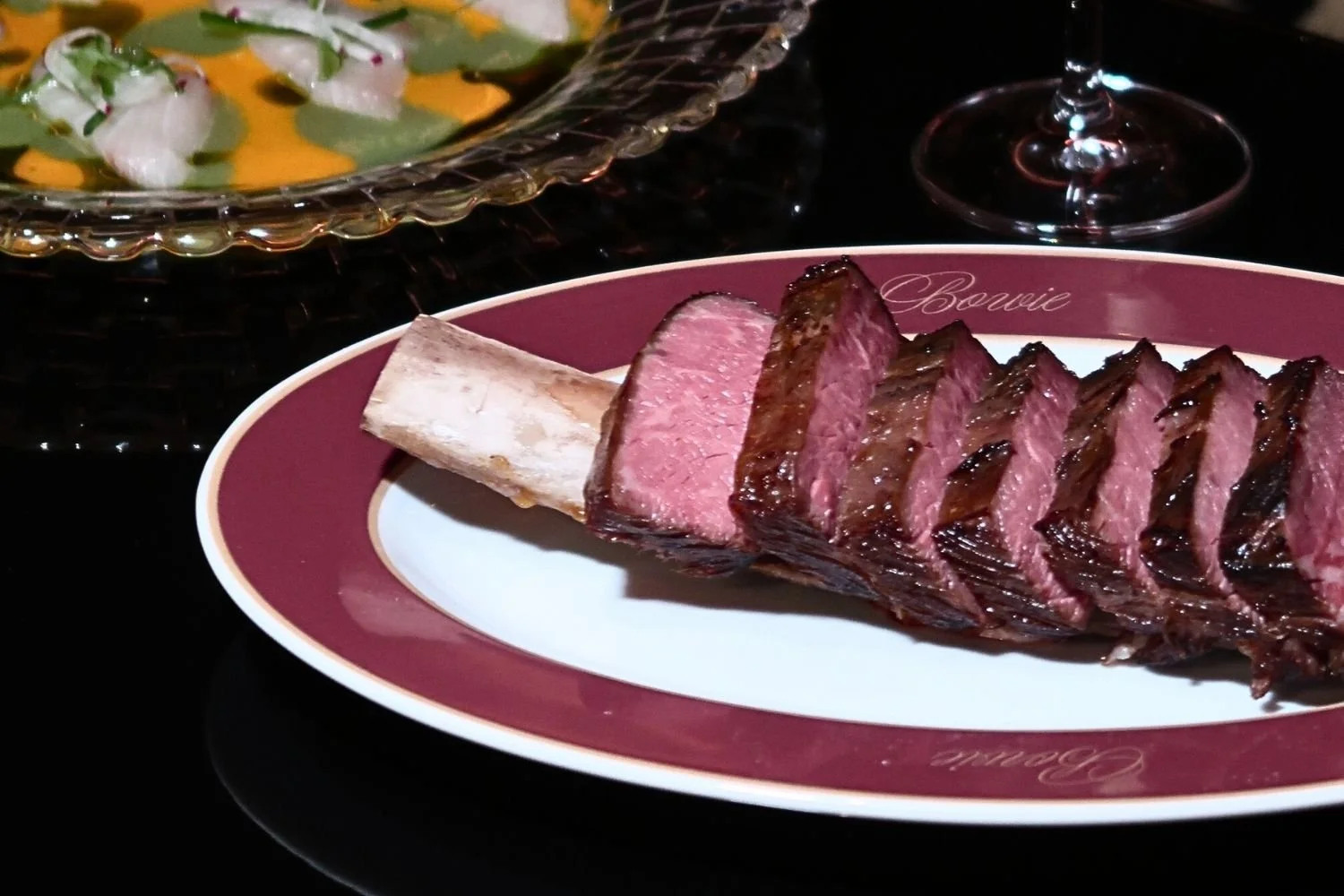
Bowie exists within this evolution. Quietly. Confidently. It reflects where Asian fusion Montreal stands today.
The menu speaks through reinterpretation. Familiar forms. Shifted flavor.
A Japanese taco built with salmon, crispy nori, and avocado.
Tuna tataki touched with shiro dashi and yuzu jam.
Mushroom dumplings finished with truffle shoyu.
Wagyu beef dumplings carrying chili garlic heat.
Plates arrive designed for the night.
A barette skewer brushed with soy and ginger.
Shrimp satay layered with peanut and cilantro.
Miso cod served clean with bib lettuce and radish.
Short rib glazed in Chinese BBQ sauce.
Steak tartare lifted with wasabi aioli and set on rösti.
The room supports the pacing.
Cocktails move alongside the food. Not before it. Not after it.
Caviar service sits comfortably next to chicken nuggets.
Calamari shares space with crushed cucumber salad.
Playfulness and restraint coexist.
Bowie does not explain itself. It participates.
It understands that modern asian dining in Montreal lives in atmosphere as much as flavor.
The Future Feels Intimate
Asian fusion in Montreal continues to narrow its focus. Smaller menus. Deeper flavors. Spaces that feel personal.
The next chapter favors:
Ingredient-driven cooking
Thoughtful reinterpretation
Dining as experience
Late-night elegance
Fusion is no longer proving itself. It is settling in.
The city is ready for that.
A City That Always Knew How to Blend
Asian fusion Montreal tells a larger story. One about identity. Movement. Adaptation. Montreal’s culinary scene thrives because it refuses rigid boundaries.
Fusion here is not confusion. It is expression.
It reflects how the city lives. How it eats. How it gathers after dark.
If you want to understand Montreal, watch how it mixes flavors. The truth is always there.